Tracking Monarch Butterflies
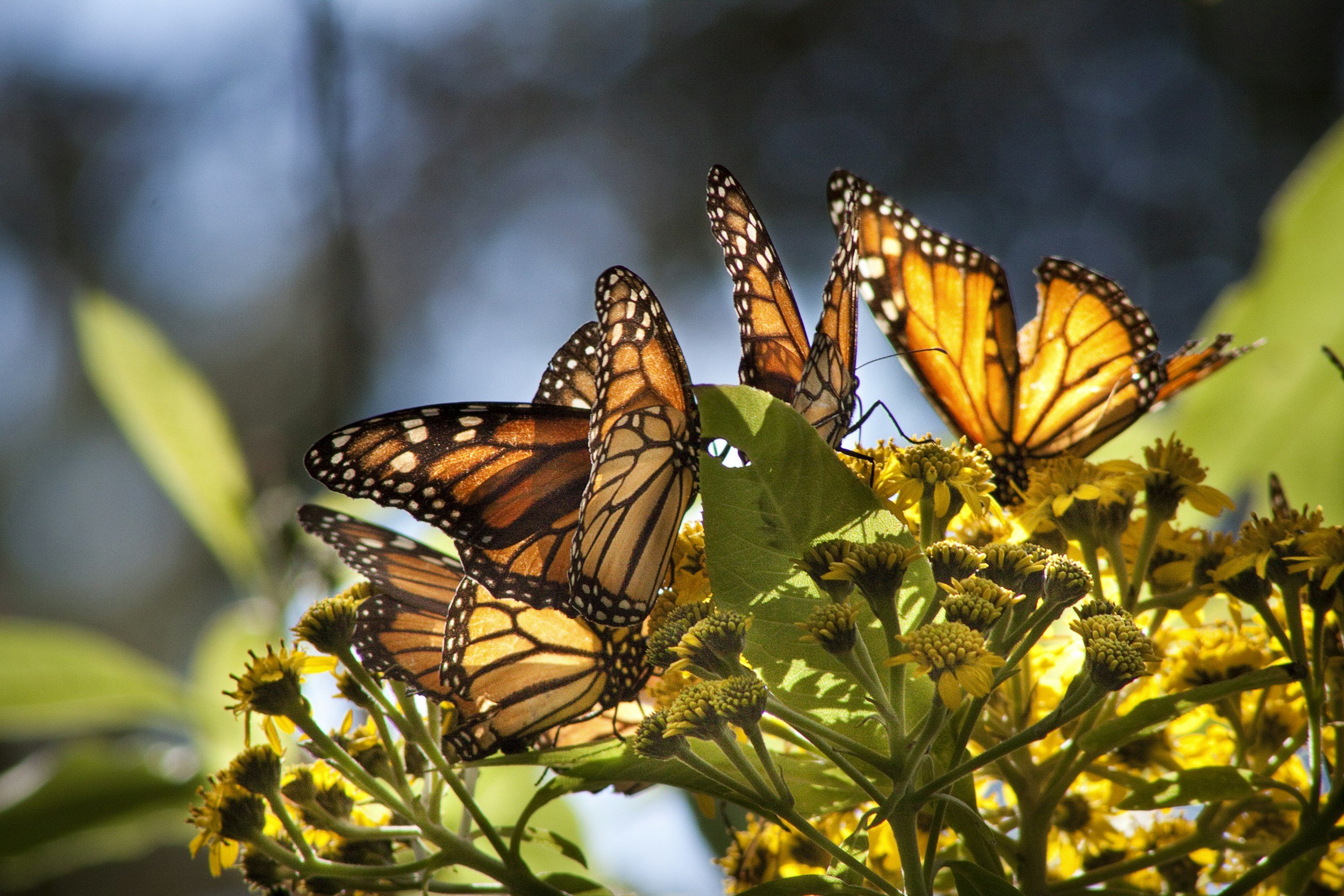
Be on the lookout—when you see a monarch, you may notice one being tracked with a tag or a tracking device.
If a monarch has died and you find it, look for the tag. The tiny white tag is placed under one wing. You may need a magnifying glass to read the information and transfer it to the tracking team (Monarch Watch or Project Monarch).
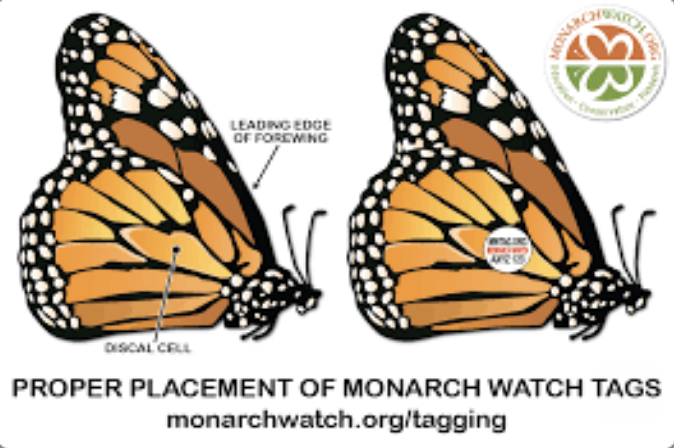
There is also a tiny tracking device that may be attached to the abdomen or wing of the butterfly. Volunteers catch monarchs (or raise them) and apply a tiny adhesive sticker (9 mm) with a unique ID, recording data such as sex and fat content. This helps study the origin of the monarch, migration timing, mortality, and distribution. Volunteers can order tags from Monarch Watch or participate in local monitoring projects.
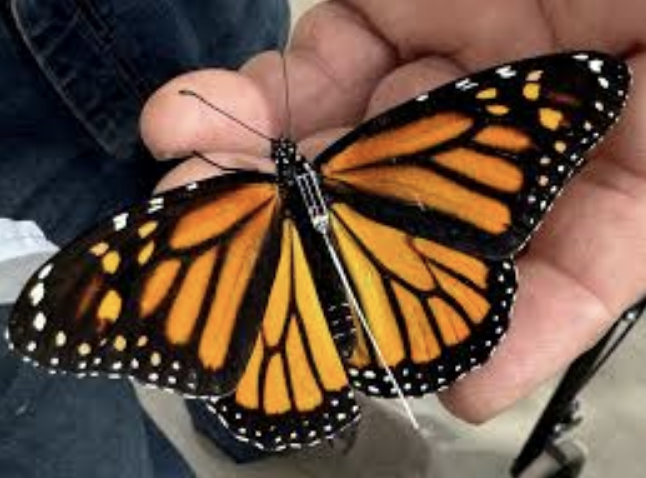
There are Bluetooth, solar-powered transmitters that are applied to the butterfly’s back. This system uses a network of antennas and relies on smartphones to detect signals from tagged butterflies. You can download the Project Monarch Science app to log sightings and help track tagged monarchs.
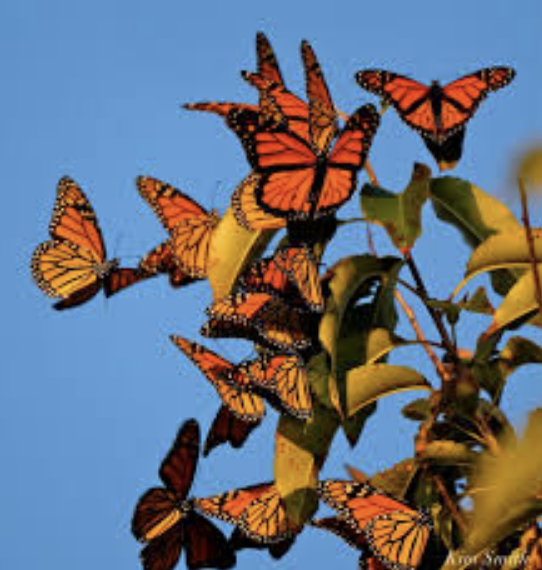
Monarch tracking also encourages you to report roosts. Roosts are large gatherings of monarchs in trees where they seek shelter and rest during migration.
We are now able to track butterflies as they travel during migration. There is even an app for your phone to watch this live.
Be involved in tracking the movement—monarch tracking groups are always looking for volunteers from different areas of the country.
More Ways to Be Involved
There are several tracking and “citizen science” informational sites available to learn more about migration. I have listed some below:
Journey North – reports on roost sightings and migration timing
Southwest Monarch Study – focuses on the desert southwest population
Correo Real – tracks monarchs in northern Mexico
“Probably no animal or insect has come to represent the process of transformation more than that of the butterfly. When a butterfly shows up, make note of the important issues confronting you at the moment; this is probably why the butterfly has appeared. What stage of change are you in?
To the Native Americans, the butterfly is a symbol of change, joy, and color. Butterflies appear to dance as they light upon flowers and such. They remind us not to take things quite so seriously within our lives. They awaken a sense of lightness and joy. They remind us that life is a dance, and dance, though powerful, is also a great pleasure. Butterflies can be reminders to get up and move, for if you can move, you can dance. Dance brings the sweetness of life back. This is further exemplified by the fact that butterflies actually have taste receptors on their legs—they taste flowers by walking on them.
Butterflies bring color and joy with them. When butterflies come into your life, look at how much or how little joy is within your life. Lighten up. Look for change. Don’t forget all change is good. Butterfly medicine reminds us to make changes when opportunities present themselves. Transformation is inevitable, but the butterfly will help teach you that growth and change do not have to be traumatic. It can occur as gently, as sweetly, and as joyfully as we wish.”
Source of information and quotes for this article:
Patricia Boese
The Monarch Project
Project Monarch
International Butterfly Breeders Association
The Monarch Watch
Garden for Wildlife
Animal Speak; The Spiritual and Magical Powers of Creatures Great and Small, Ted Andrews