Awe of the Monarch

I was in the pool the other day, but I would rather be swimming at Duck Harbor. My pool colleague said he was so happy he moved to Virginia; he knew right away this was where he should be. He said all the years he moved around living in different places, when he set foot here in Virginia, he knew he was home. Humph, I thought, I have lived in my share of places, and I have never been anywhere that felt like this is where I should have been all along.
That’s because I have the lake, Duck Harbor. My whole life, I’ve had Duck Harbor. Whether for 2 months or only two weeks of a summer, I still come to Duck Harbor. I don’t do fancy vacations or travel much; I come to Duck Harbor.
I think it is the awe of a place that makes one know it is where they should be. The magical, mystical wonder of the nature at the lake calls forth that awe. Merriam-Webster dictionary defines awe as “wonder that is inspired by overwhelming greatness, as in beauty, power, or size.”
Think of all the amazing natural life at the lake that brings that awe alive.
Take the Monarch Butterfly; certainly you have seen them here in the summer.
The magnificent Monarch has a fascinating story, a life that should humble us. We should be in awe of, and work to preserve, the natural environment that favors this majestic butterfly. The monarch is a gauge of the health of our environment.
Let’s explore the amazing world of the monarch. There are many informative sites to explore this amazing creature. I sourced The Monarch Project, International Butterfly Breeders Association, AI, Wikipedia, and my aunt, Pat, who for years has raised and released monarchs and now tracks their migration.
Monarch Lifecycle
Monarchs are insects with complete metamorphosis, which means they have an egg, larva (caterpillar), pupa (chrysalis), and adult stage (butterfly). Milkweed plants are necessary for egg deposition and larval feeding.

Butterflies have enormous compound eyes that sense light and images. The two antennae are densely covered with scales that sense smell. The long butterfly tongue sucks nectar and water for nourishment. While seeking nectar, they pollinate plants.
Our area of Pennsylvania is vital to their migration because of the plethora of milkweed plants. Milkweed is vital to their survival. There has been a marked decrease in milkweed because of land development, harvesting of hay fields during peak milkweed season, and other changing climate and environmental conditions.
The male and female monarch mate, often for several hours or overnight, with sperm transferred to the female. The female stores sperm in her storage organ (spermatheca). As an egg travels down the female oviduct, the female releases sperm, which enters the egg through the micropyle (a tiny funnel-shaped opening at one end), resulting in a fertilized egg. They stay in the egg stage for about 3 to 5 days, depending on the temperature.
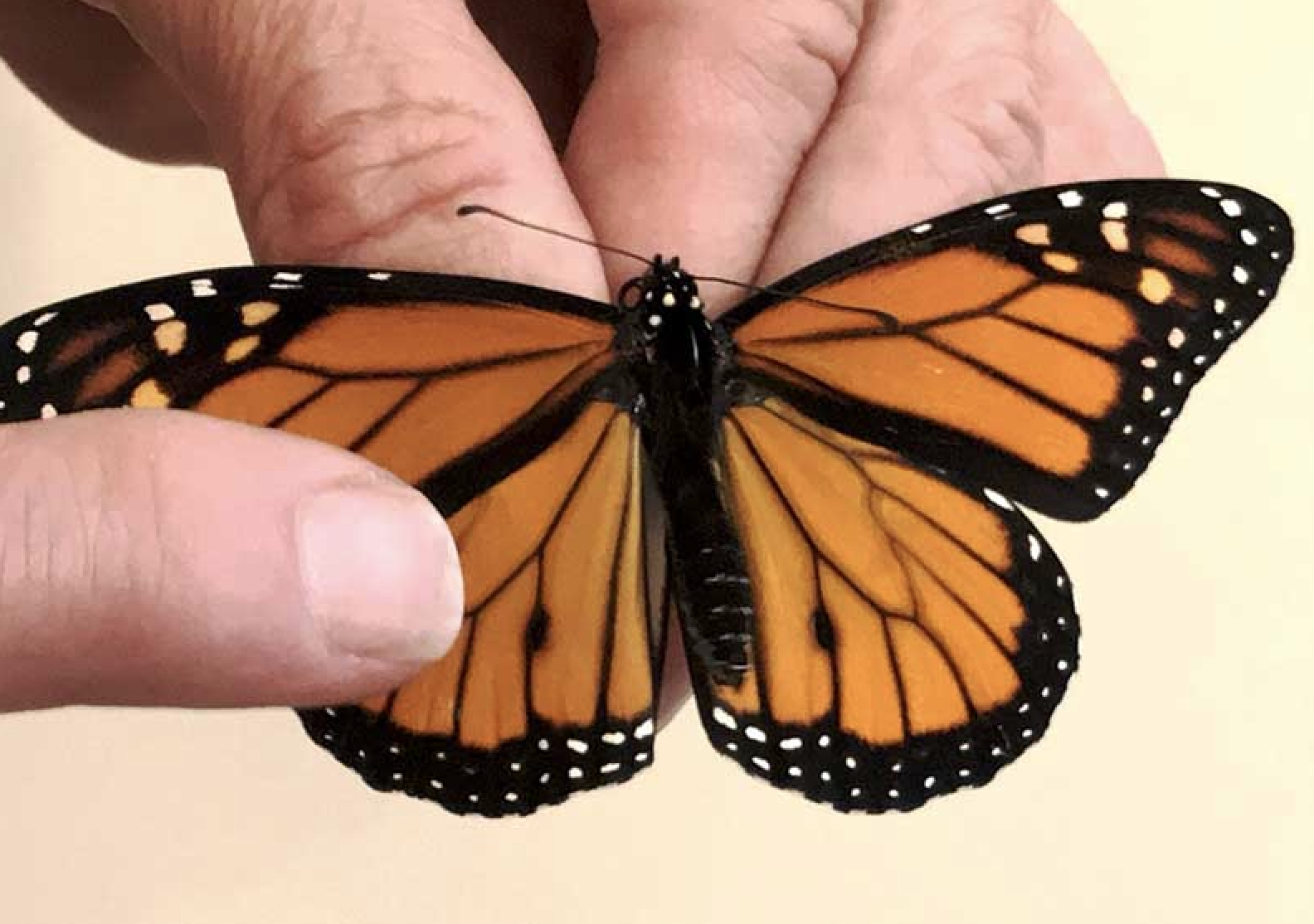
The male and female appear different. Do you think you could tell the difference? The male has a black spot in the center of the hind wings. Females often look darker than males and have wider veins on their wings.
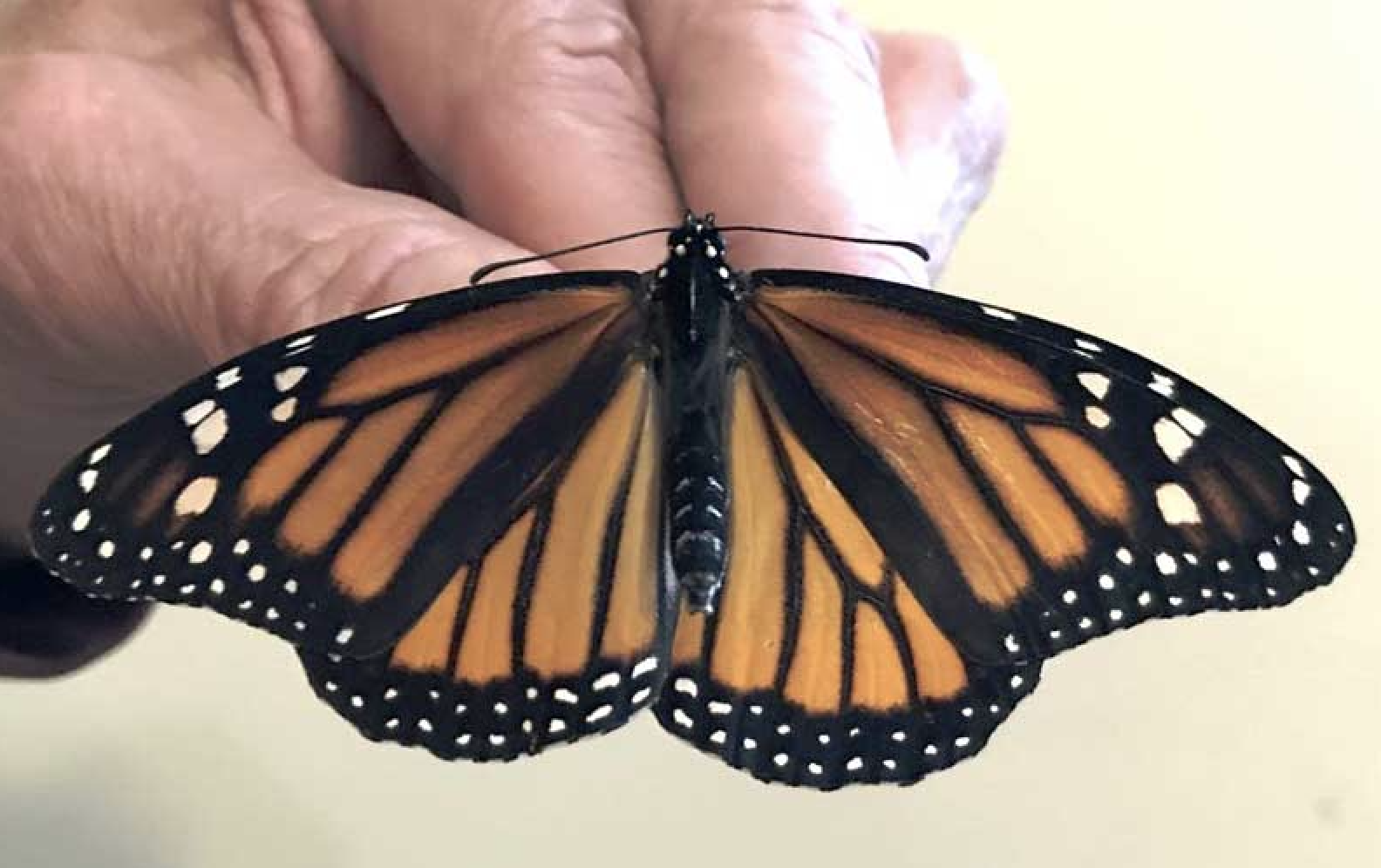
The female lays her eggs only on the milkweed plant, as it is the sole source of food for the caterpillars of the monarch; they only eat milkweed leaves. The milkweed provides food, and the leaves provide shelter. The milkweed acts as a poison that will kill predators should they try to eat the caterpillar, but it does not kill the caterpillar.
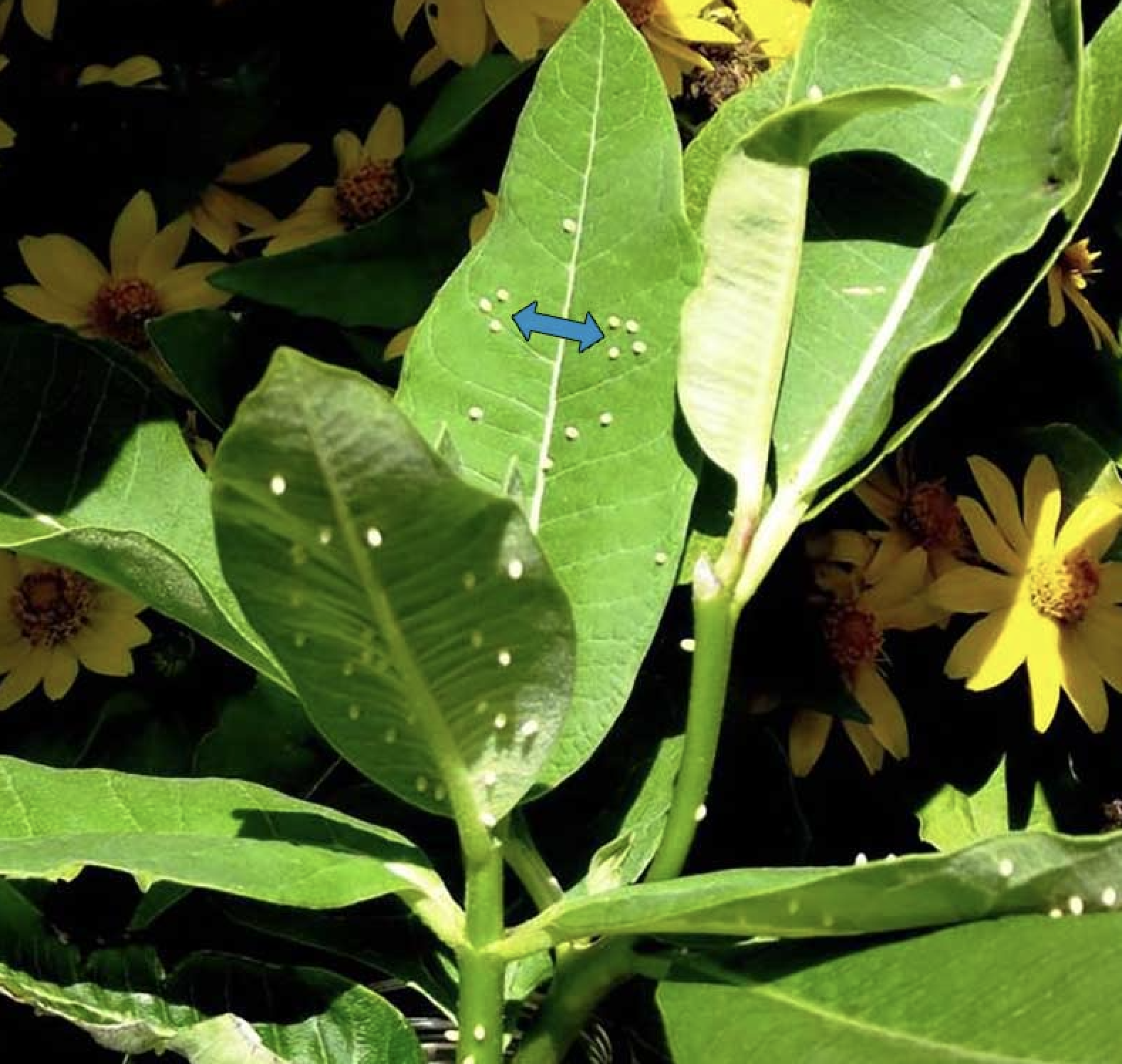
Monarch females usually lay an egg on a milkweed plant, often on the bottom of a leaf near the top of the plant. Females secrete a small amount of glue to attach the eggs to the plant. Eggs are about the size of a pinhead or the tip of a pencil. They hatch about four days after being laid. In two to five weeks, they lay about 300 to 500 eggs (source: The Monarch Project). Check my math, that could be 2,500 eggs!
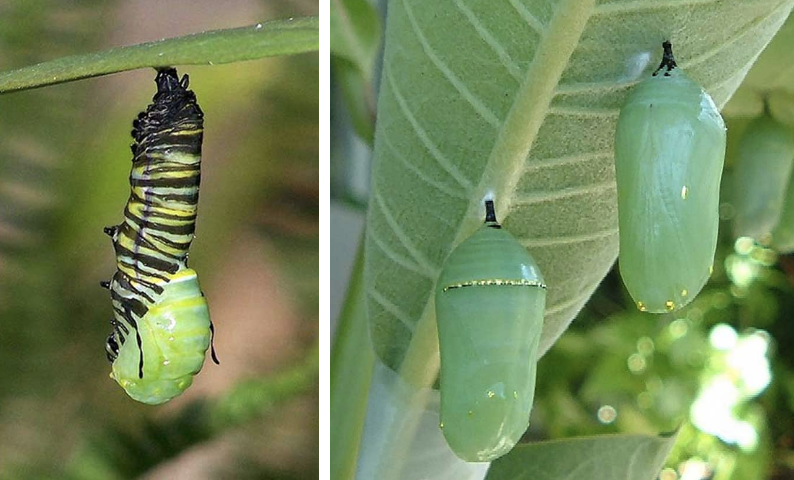
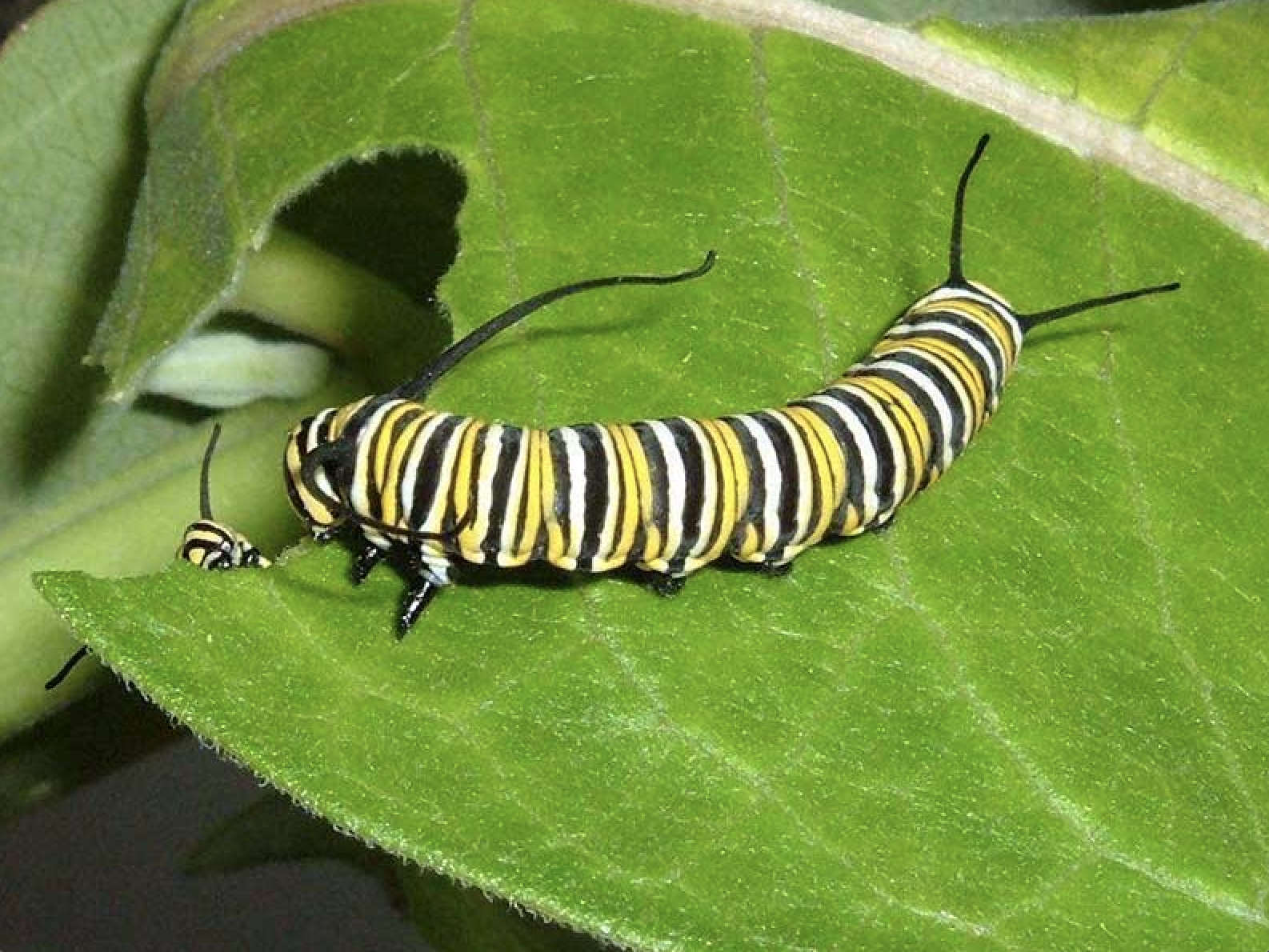
After the caterpillar hatches, it eats constantly and grows quickly. This requires the caterpillar to shed its skin as it grows; the only time eating pauses is to shed skin. This period of skin shedding is called an instar, also known as molting. Monarch caterpillars have five instars and grow to almost 2,000 times their original mass in just 9 to 14 days.
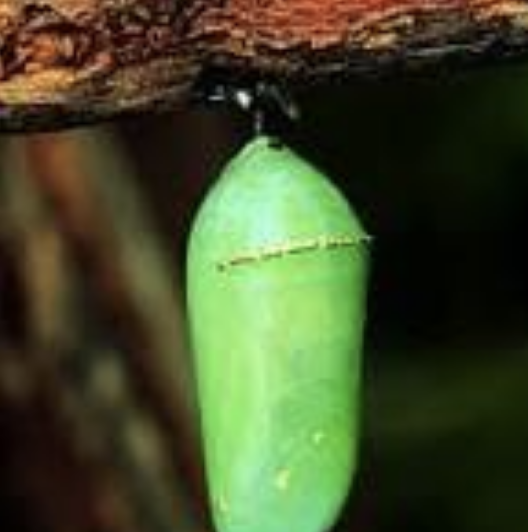
After the last instar, the monarch crawls away from the milkweed plant to find a secure location where it forms a silk pad and hangs upside down in a J shape before shedding its skin and exposing the bright green chrysalis. In 8 to 15 days, an adult emerges and pumps fluid from its large abdomen into the veins of its crumpled wings to expand and harden them, a crucial process that allows it to fly. The butterfly hangs upside down, allowing the wings to dry and harden for several hours before it can take its first flight and search for nectar.
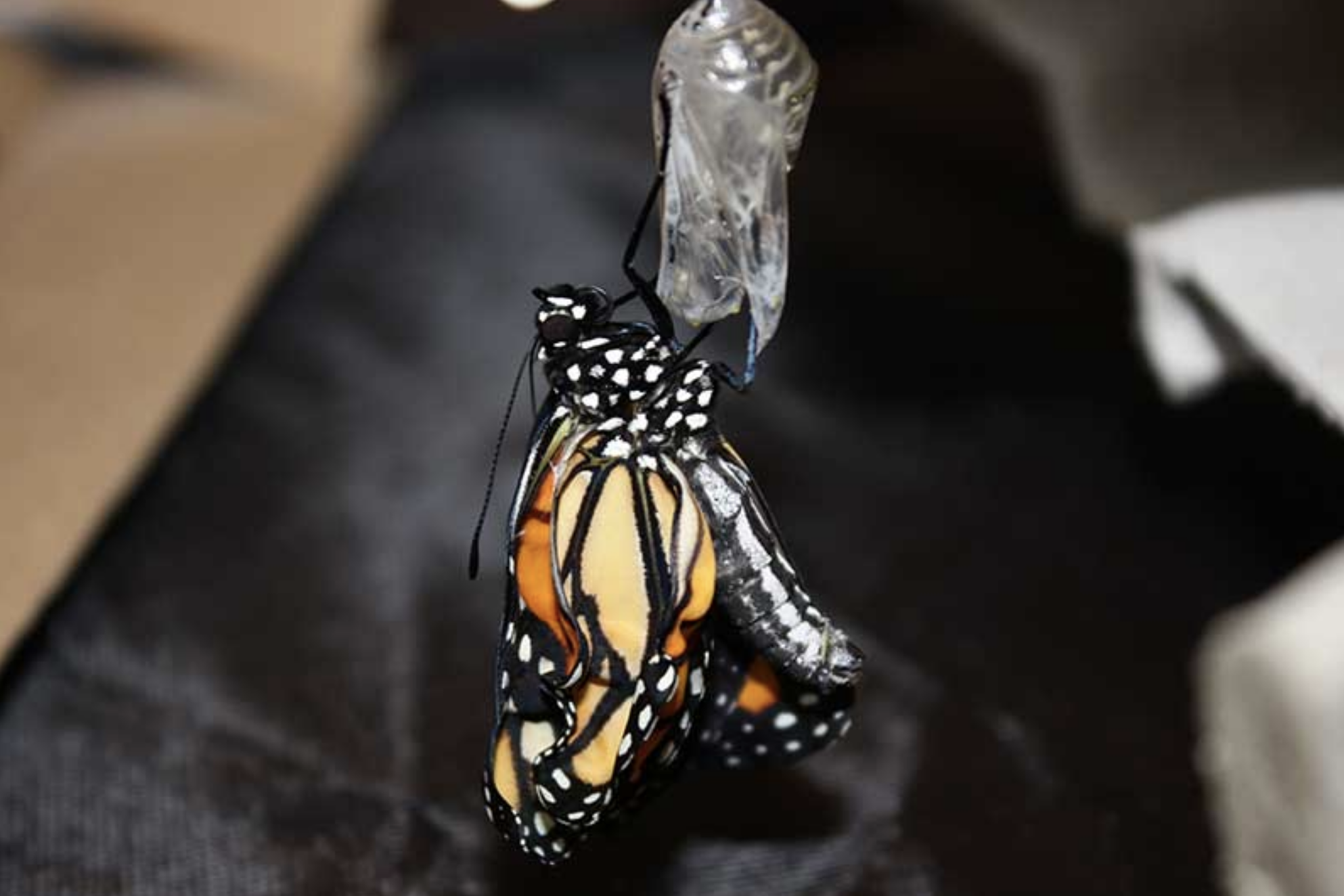
Adult monarchs in the summer generation live from two to five weeks. The final generation of monarchs, adults that emerge in late summer (likely the ones in Equinunk), have an exceptional job. They are the ones that prepare to migrate to wintering grounds far away. They do not mate or lay eggs prior to departure. The decreasing day length and temperatures, along with aging milkweed and fewer nectar sources, signal them to store energy to prepare for migration.